Manned Guarding
Deployment of trained security personnel for patrols, access control, and rapid response.
Licensed • 24/7 Available • Bali & Across Indonesia

Four stages, one case owner
The Process
Clients engage services through a structured process of needs assessment, bespoke solution design, and continuous operational oversight, ensuring tailored and effective security outcomes.
In Short
Private security in Bali operates as a critical, multi-faceted sector, providing essential protection and risk mitigation across various domains. It encompasses manned guarding, advanced security systems, and specialised services such as personal protection and cash solutions.
Before Anyone Is Deployed
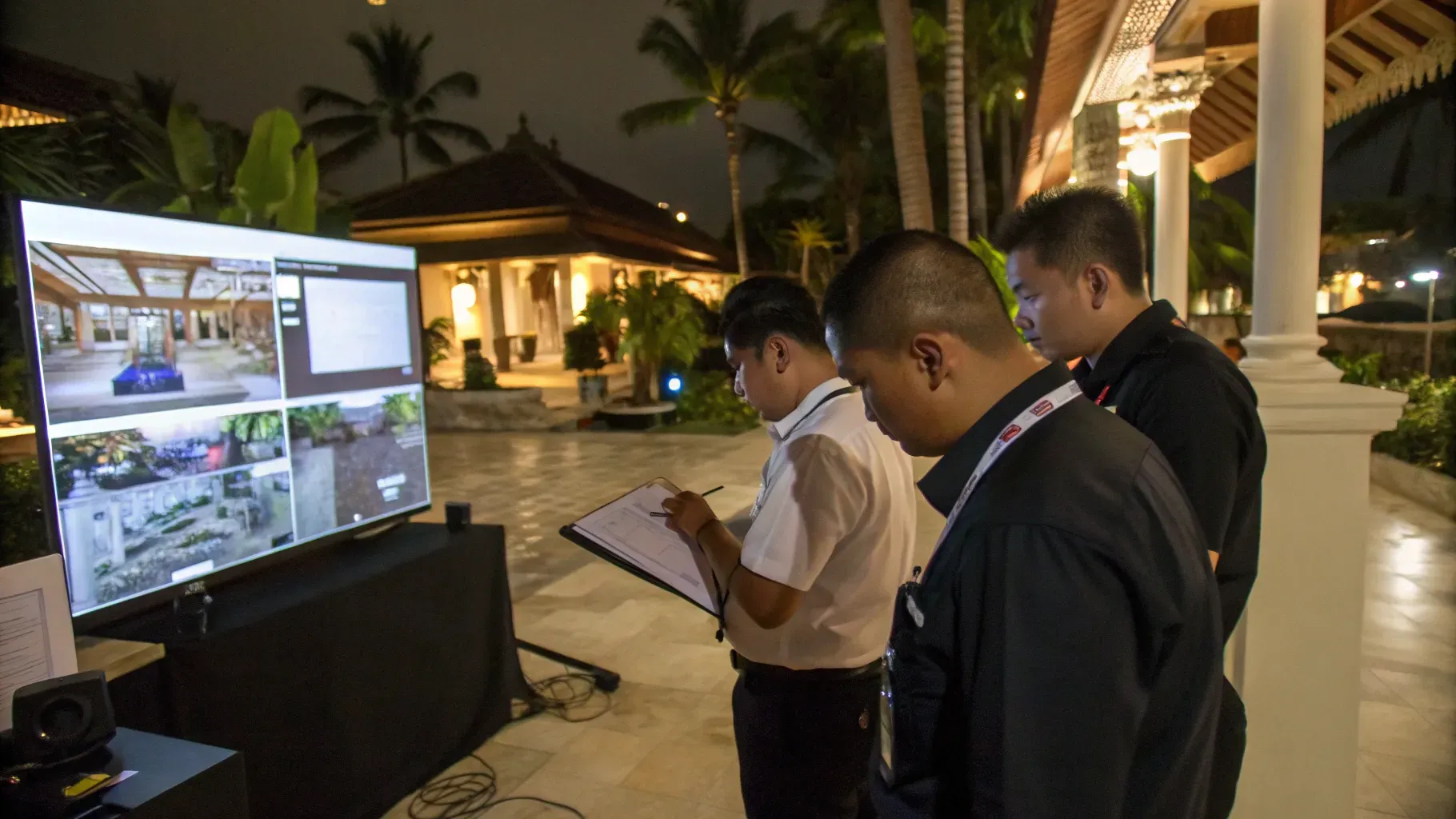
Every engagement opens with a site and risk assessment: what is exposed, who holds access, and where the thin points are. The plan follows from that, not from a price list.
Engagement
Engaging private security services in Bali follows a methodical approach to ensure client requirements are precisely met and effective solutions are deployed.
The process commences with a comprehensive consultation. Clients articulate their specific security concerns, operational context, and desired outcomes. Security providers conduct a thorough assessment of the premises, assets, potential threats, and existing vulnerabilities. This stage involves detailed discussions to understand the unique challenges and objectives, whether for a private residence, commercial establishment, event, or personal protection requirement.
Following the assessment, security experts design a tailored security plan. This plan integrates various services and technologies to create a robust and efficient protective strategy. The design phase ensures that all proposed measures are proportionate to the identified risks and align with the client’s budget and operational preferences.
Once the bespoke security plan is approved, the implementation phase begins. This involves the deployment of personnel, installation of technology, and establishment of operational protocols. All security staff undergo rigorous training specific to the client’s environment and requirements. Technology installations are executed by certified technicians, ensuring optimal functionality and integration.
Private security is not a static service. Effective providers offer continuous management, monitoring, and regular reviews of the deployed solutions. This iterative process ensures that security measures remain effective, adaptive, and fully aligned with the client’s changing needs and the dynamic security landscape of Bali.
By maintaining a proactive and responsive approach, private security services deliver sustained peace of mind and protection.
What a Plan Includes
This plan integrates various services and technologies to create a robust and efficient protective strategy.
Deployment of trained security personnel for patrols, access control, and rapid response.
Installation and integration of CCTV surveillance, alarm systems, access control, and perimeter protection.
Provision of close protection officers for individuals requiring enhanced personal safety.
Secure transportation and management of valuable assets.
Planning and execution of security protocols for gatherings and events.
Centralised monitoring of security systems and alarms.
Ongoing Review
Effective providers offer continuous management, monitoring, and regular reviews of the deployed solutions.
| Element | What It Covers | Why It Matters |
|---|---|---|
| 24/7 Monitoring | Centralised monitoring of security systems and alarms. | Our dedicated operations centre maintains continuous oversight, ensuring immediate response to any security incident or emergency. |
| Performance Reporting | Regular reports on security incidents, patrol logs, and system status. | Keeps the client sighted on what has actually happened on site, not just what was planned. |
| Threat Assessment Updates | Continuous evaluation of evolving threats and adjustments to security protocols. | Ensures security measures remain effective, adaptive, and fully aligned with the client’s changing needs. |
| Technology Upgrades | Recommendations for system enhancements or upgrades to maintain optimal protection. | Keeps pace with the dynamic security landscape of Bali. |
Private security is not a static service.
Questions
The process begins with a confidential consultation to assess your specific needs. Following this, we conduct a risk assessment and propose a tailored security plan. Upon approval, we implement the plan, providing continuous oversight and support throughout the service period.
To schedule a consultation, contact a private security provider directly through their official website or customer service phone number.
Meeting with a security team before committing is usually possible and advisable. This allows you to discuss your needs and assess their suitability for your requirements.
When briefing a private security team in Bali, include details about your itinerary, specific security concerns, personal preferences, and any known risks. Clear communication about expectations will help tailor the service to your needs.
Finalizing a private security agreement in Bali can vary based on service complexity. Typically, it ranges from a few days to a couple of weeks.
Ensure the contract outlines services, costs, duration, and any additional terms. Clear communication with the provider is crucial for understanding all details.
Stage One
The process commences with a comprehensive consultation. Tell us your security concerns, operational context, and desired outcomes — all inquiries are confidential.
All inquiries are confidential.